
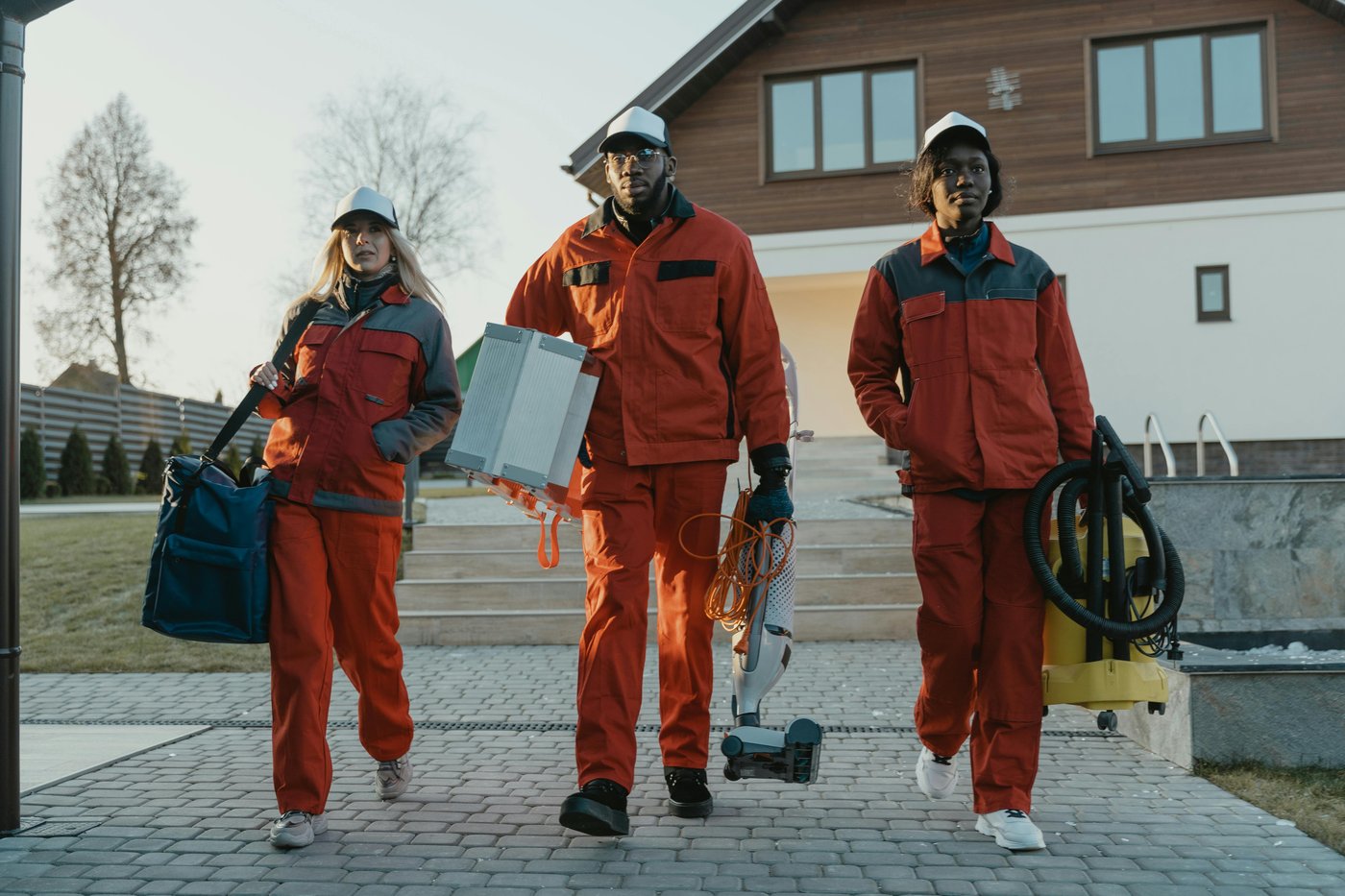
Night cleaning keeps cleaners out of the way; day cleaning is more visible, often cheaper to staff, safer for lone workers, and greener. Neither is universally right — it depends on your site's security, footfall and hours. The industry has shifted towards daytime and twilight patterns in recent years. Bottom line: default to day or twilight unless the space genuinely needs to be empty.
How each pattern works
Night cleaning runs after the building empties — teams clean undisturbed and the space is pristine for the next morning. Day cleaning (including 'twilight' early-evening and 'day porter' cover) happens while people are in, with visible operatives keeping washrooms, touchpoints and communal areas topped up through the day. Many office cleaning contracts now blend the two: a light daytime porter plus a twilight deep of the workspace.
Cost and access
Night work can carry a shift premium and needs the building unlocked, alarmed-off and often supervised, which adds cost and key-holding complexity. Day and twilight patterns avoid unsociable-hours premiums and out-of-hours access arrangements, which is why they are frequently cheaper to run. Against that, cleaning an occupied space can be slower and needs to work around people.
Security, keys and lone working
Letting cleaners into an empty building at night raises security and lone-working questions. HSE names cleaners as a classic example of lone workers, who face the same hazards as anyone but with greater risk because no one is there to help. Daytime cleaning removes most of that exposure — colleagues are present, and there is no need to hand out keys and alarm codes.
Visibility, sustainability and morale
Visible daytime cleaning reassures occupants that the building is being looked after and lets issues be fixed on the spot. It is also greener: cleaning while the lights and heating are already on avoids powering an empty building overnight just for the cleaners. And it tends to be better for staff, who get sociable hours and are treated as part of the workplace rather than an invisible night shift.
Choosing the right pattern
Choose night cleaning where the space must be empty — trading floors, busy retail, secure areas, or where machinery and floor work need clear space. Choose day or twilight where visibility, cost and welfare matter more, which is most offices. We survey your hours, security and footfall and recommend the pattern, and can mix a daytime porter with an out-of-hours deep.
Day cleaning vs night cleaning, compared
| Factor | Day / twilight cleaning | Night cleaning |
|---|---|---|
| Cost | Often cheaper — no unsociable-hours premium or out-of-hours access | Can carry a shift premium plus key-holding and supervision cost |
| Control | Visible, issues fixed on the spot | Undisturbed; space pristine for the morning |
| Reliability / cover | Colleagues present; easy to supervise | Depends on out-of-hours cover and access arrangements |
| Compliance | Lower lone-working risk; greener energy use | Higher lone-working and security exposure to manage |
| Best for | Most offices; sites valuing visibility and welfare | Retail, secure areas, floor/machine work needing empty space |