
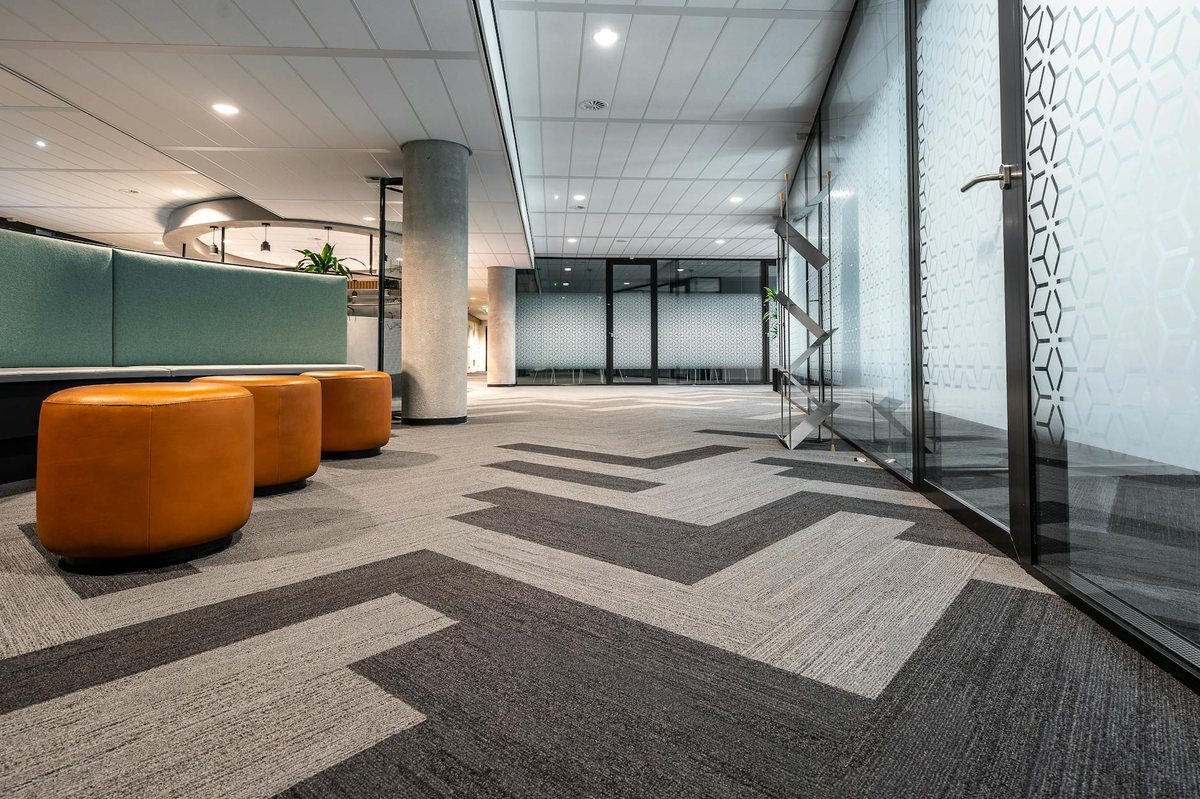
Shopping centre cleaning is a two-shift operation: an overnight team resets the malls, food courts, washrooms and car parks before trading, and daytime porters keep spills, litter and washrooms under control through peak footfall. It spans common areas, escalators and travelators, glass, and multi-storey car parks - and it is bought by managing agents to a strict SLA. OptusGlean delivers both shifts on one fixed monthly contract.
What does shopping centre cleaning cover?
A shopping centre is a portfolio of very different cleaning environments under one roof. The scope covers mall common areas and hard floors, food courts and seating, escalators and travelators, glass balustrades and shopfront glazing, high-traffic public washrooms, service corridors and back-of-house, entrances and external areas, and multi-storey or surface car parks. Each zone has its own frequency, method and target standard.
Night team vs trading-hours porterage: how the two shifts work
The heavy work - machine floor-scrubbing the malls, deep-cleaning food courts, isolating and cleaning escalators, jet-washing entrances - is done overnight while the centre is closed, so it is trading-ready at opening. Through the day, a porter team patrols the malls and food court, clears litter and spills immediately, runs washroom checks on a timed rota, and responds to incidents. Buyers value this split because it protects both presentation and shopper safety.
How are escalators, travelators and glass cleaned safely?
Escalators and travelators are cleaned overnight under a permit-to-work and lock-off procedure - combs, steps, skirting and balustrade glass - because moving machinery is a serious hazard. High-level glazing and balustrades follow the Work at Height Regulations 2005 hierarchy (avoid, prevent, mitigate; HSE), using access equipment rather than defaulting to harnesses. Wet-floor management during trading hours reduces slips - the single largest category of reported workplace injury at around 30% (HSE).
Managing footfall surges - sales, Christmas and events
Footfall is not flat. Christmas trading, sale weekends, half-term and centre events multiply litter, food-court use and washroom demand. Our mobilisation plan flexes porter numbers and washroom-check frequency to the retail calendar, with surge cover agreed in advance rather than improvised - so a busy Saturday looks as clean as a quiet Tuesday.
Who buys shopping centre cleaning - managing agents and SLAs
Shopping centres are typically cleaned under contract to a managing agent - firms such as Savills, CBRE or JLL - on behalf of the landlord, against a detailed SLA and KPI regime. OptusGlean works to auditable specifications, provides documented reporting, and covers TUPE 2006 transfers when a contract changes hands (a cleaning re-tender is a service provision change under TUPE, so the incumbent team transfers - Acas). Every OptusGlean operative is directly employed on PAYE and vetted before their first shift. We DBS-check operatives in England and Wales, and apply the equivalent PVG (Disclosure Scotland) and AccessNI checks in Scotland and Northern Ireland. Where a site involves regulated activity with children or vulnerable adults, an Enhanced DBS (currently £49.50, gov.uk) is used. We never sub-contract to unvetted labour.
Pricing and mobilisation for retail estates
OptusGlean prices every contract as a single fixed monthly fee paid by Direct Debit - never an hourly rate that drifts. The fee is built from the specification agreed at your free site survey, and it already accounts for the wage floor (National Living Wage £12.71/hr from April 2026, or the real Living Wage of £13.45 UK / £14.80 London where a contract requires it), employer’s NI, holiday pay, supervision, consumables, insurance and management. VAT is added at the standard 20%. For managing agents running several centres, a single national agreement delivers one standard and one point of contact across the estate, instead of a different local contractor at every scheme.