
Airbnb cleaning is a fast, repeatable turnaround between guests to a hotel-style presentation; end-of-tenancy cleaning is an intensive one-off clean to hand a property back against an inventory. One is frequent and light-touch-but-immaculate, the other is deep and occasional. Bottom line: turnaround cleaning for short lets, end-of-tenancy cleaning for move-outs.
What Airbnb / turnaround cleaning is
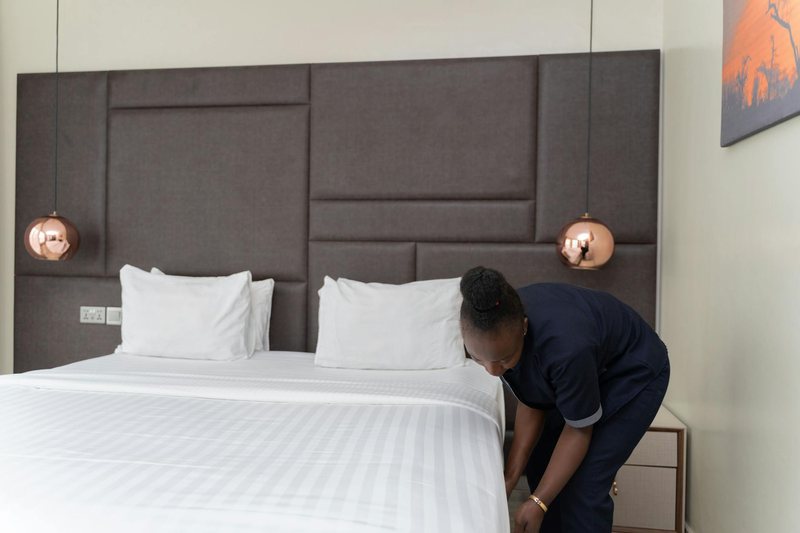
Short-let turnaround cleaning happens between every guest stay — often same-day, on a tight check-out-to-check-in window. It is about consistent, hotel-standard presentation: fresh linen and towels, spotless bathrooms and kitchen, restocked consumables and welcome items, and a quick damage check. Speed and repeatability matter as much as depth, because it happens constantly and guests review the result immediately.
What end-of-tenancy cleaning is
An end-of-tenancy clean is a one-off, checklist-driven deep clean when a tenant moves out, aimed at returning the property to its check-in condition and protecting the deposit. It covers the oven, inside cupboards, skirtings, limescale, internal windows and carpets — the full move-out list — and is judged against an inventory clerk's report rather than a guest's overnight impression.
Frequency, scope and standard
The core difference is rhythm. Turnaround cleaning is high-frequency and presentation-led, delivered many times a month to a consistent hotel standard. End-of-tenancy cleaning is a single deep event to an inventory standard. A turnaround clean keeps a property guest-ready; an end-of-tenancy clean resets it for a new occupier or the landlord's handover. Between long-stay guests, a short let may also need a periodic deep clean closer to the end-of-tenancy scope.
What each costs
End-of-tenancy cleaning is priced by property size — roughly £100–£120 for a studio up to £320–£380 for four beds and more, with a 20–30% London premium. Turnaround cleaning is usually priced per changeover as a flat rate reflecting the property size and the linen and consumables involved, and is booked as an ongoing arrangement rather than a one-off. Because it recurs, hosts value a reliable provider with built-in cover far more than the lowest single price.
The licensing angle short-let hosts must know
Short lets carry rules ordinary tenancies do not. In Scotland, a local-council licence has been mandatory for all short-term lets since 1 October 2022, and operating without one is a criminal offence. In Greater London, letting a residential property short-term is capped at 90 nights per calendar year without planning permission. These do not change the cleaning itself, but they shape how — and how often — a host can operate, and therefore the turnaround pattern you need. Cleaning is separate from, but sits alongside, that compliance.
Airbnb turnaround vs end-of-tenancy cleaning
| Factor | Airbnb / turnaround | End-of-tenancy |
|---|---|---|
| Cost | Flat rate per changeover; ongoing arrangement | By property size (~£100–£380); one-off |
| Control | Consistent hotel-standard presentation, every guest | Full move-out checklist against the inventory |
| Reliability / cover | Critical — recurs constantly; needs built-in cover | One-off, timed to the move-out date |
| Compliance | Sits alongside short-let licensing (Scotland, London 90-night) | Judged against inventory; Tenant Fees Act 2019 applies |
| Best for | Short-let hosts turning a property between guests | Landlords and tenants at the end of a tenancy |