
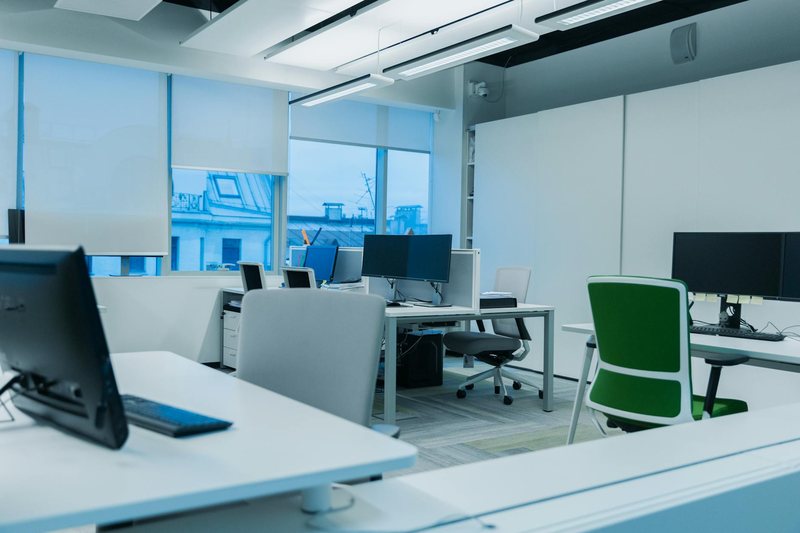
Most offices should be cleaned daily for the essentials — touchpoints, washrooms, kitchens and waste — with weekly detailed cleaning and periodic deep cleans on top. The right frequency depends on footfall, headcount, the type of work and whether the space is client-facing. This guide sets out the sensible frequency for each area and what changes it.
What needs cleaning every day?
In a normally occupied office, the daily essentials are waste removal, touchpoint disinfection (handles, switches, shared equipment), washroom cleaning and restocking, kitchen and breakout cleaning, and vacuuming or mopping main-traffic floors. These are the tasks that affect hygiene and first impressions most, so they should not be stretched beyond daily in an occupied workplace. Build them into a daily office cleaning checklist.
What can be weekly or monthly?
Detailed dusting, internal glass, thorough vacuuming and washroom descaling sit comfortably at weekly frequency. High-level dusting, accessible window cleaning and hard-floor maintenance are typically monthly. The principle is simple: the more a surface is touched or seen, the more often it needs cleaning; the less it is, the longer the interval can safely be.
What drives the right frequency?
Four things move the answer: footfall and headcount (a busy 100-person floor needs more than a quiet 10-person office), the type of work (food handling, healthcare or industrial settings need more), client-facing areas (reception and meeting rooms carry the brand), and occupancy patterns (hybrid working may reduce some frequencies but not washroom or kitchen hygiene). Healthcare settings follow their own national cleaning standards rather than office norms.
Does hybrid working change how often to clean?
Partly. Fewer people in the building can justify reducing some frequencies — but the hygiene-critical tasks (touchpoints, washrooms, kitchens) should stay daily on any day the office is used, because risk is per-use, not per-headcount. A common pattern is daily hygiene cleaning with detailed tasks flexed to occupancy. A survey settles the right pattern for your actual usage.
Setting frequency in the specification
Frequency is not a guess — it is a line in the specification, agreed per area and audited. That way you pay for the right level of cleaning, no more and no less, and can adjust it as usage changes. We set frequencies around your building when we scope an office cleaning contract; get the right pattern priced with a fixed monthly quote.
Recommended office cleaning frequency by area
| Area | Recommended frequency | Notes |
|---|---|---|
| Touchpoints (handles, switches) | Daily | Priority for infection control |
| Washrooms | Daily (more in high footfall) | Restock consumables each visit |
| Kitchen / breakout | Daily | Hygiene-critical on any used day |
| Desks & workstations | Daily to weekly | Daily in shared/hot-desk settings |
| Carpets & upholstery | Periodic (quarterly typical) | More often in high-traffic areas |
| High-level & windows | Monthly to quarterly | Access-dependent |