
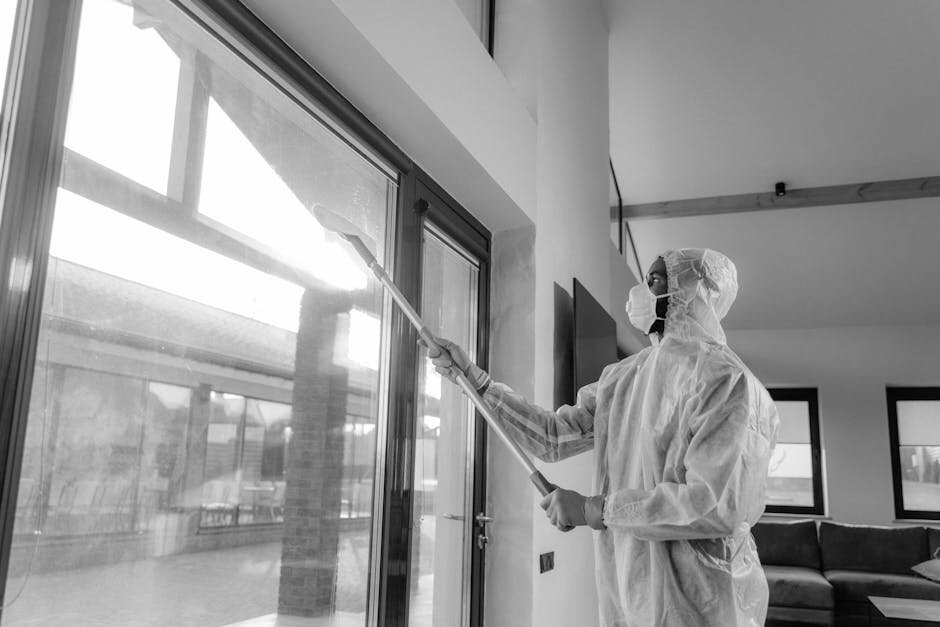
The Work at Height Regulations 2005 govern any cleaning done at height — window, high-level, gutter and facade work. The law sets a strict hierarchy: first avoid work at height where reasonably practicable, then prevent falls with suitable equipment, and only then mitigate the consequences of a fall. Choosing a harness first is not acceptable.
What are the Work at Height Regulations 2005?
The Work at Height Regulations 2005 exist to prevent death and injury caused by a fall from height, according to the HSE. They apply directly to cleaning tasks such as window cleaning and high-level cleaning, and to any work where a person could fall a distance liable to cause injury.
What is the work-at-height hierarchy of control?
The regulations require duty holders to follow a hierarchy in order. You cannot skip to personal protective equipment because it is convenient — you must work down the list.
Why isn't a harness the first choice?
According to the HSE, it is not acceptable to select personal fall arrest (harnesses and lanyards) as the first choice. A harness only acts after a fall has begun; it does not prevent the fall. The law prioritises avoiding the work, then preventing the fall, then collective protection — with personal fall arrest as a last resort within the mitigate step, not a shortcut.
How this applies to window, gutter and facade cleaning
The practical consequence is that reputable contractors reach for pole-fed and ground-based methods first, then access equipment such as MEWPs and towers, and only use rope access or fall-arrest systems where nothing safer is reasonably practicable — each choice recorded in a risk assessment and method statement for the specific site.
OptusGlean's high-level and window-cleaning work is planned against this hierarchy, with site-specific method statements rather than a one-size-fits-all approach.